


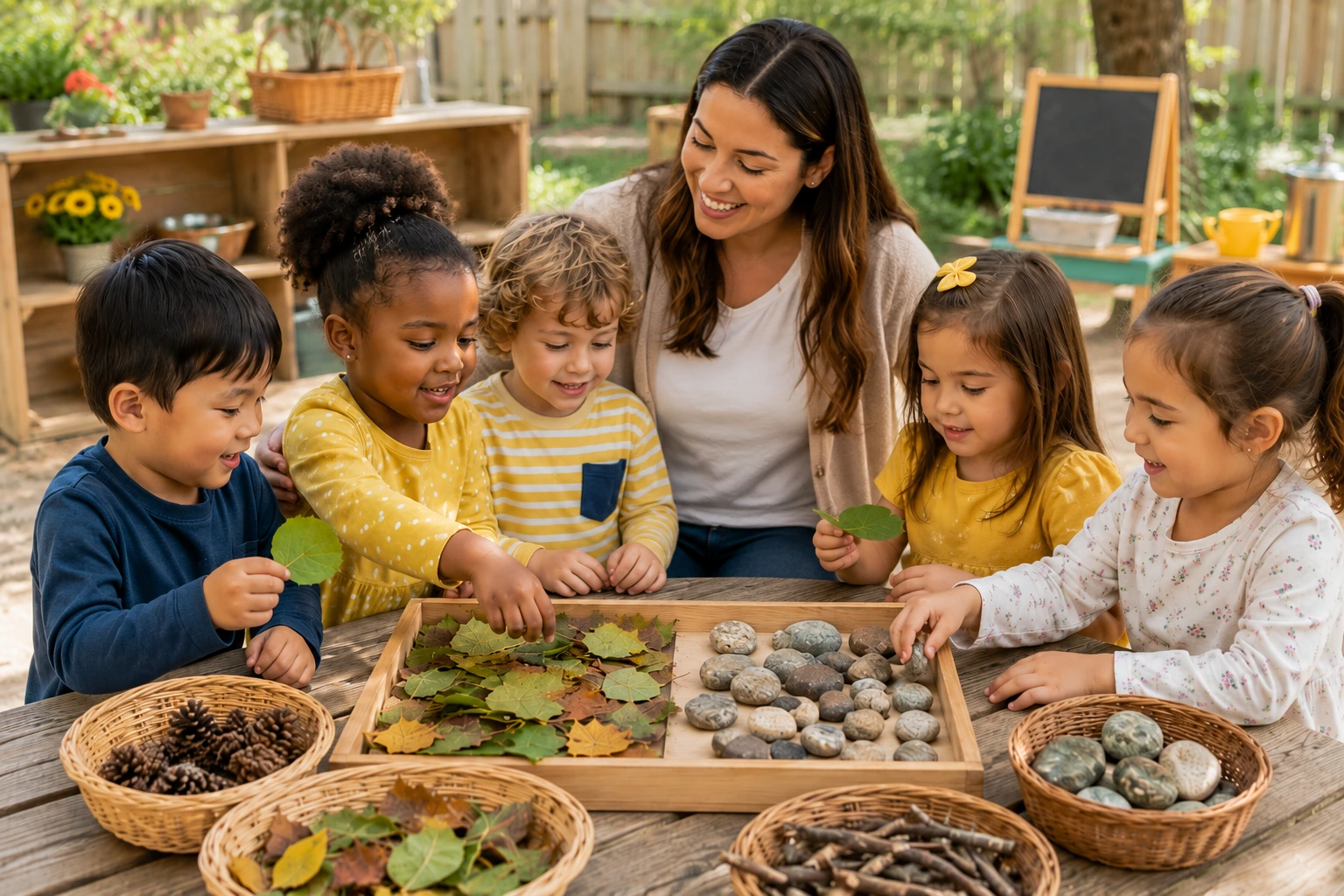
You can help your preschooler build early math skills through simple activities that fit into everyday routines. Counting toys, sorting laundry, comparing sizes, spotting patterns, and reading number books give your child practical ways to understand numbers and quantities.
Young children build early math understanding when they handle objects, move them into groups, compare what is more or less, and describe what they notice. These experiences help your child connect number words with real objects and recognize relationships between size, quantity, and order.
At Clifford Glover Day Care Center, Inc., we know preschoolers often begin to understand math when they count, sort, notice patterns, and compare quantities during familiar routines. A few focused minutes during cleanup, meals, or playtime can provide useful practice without making the activity feel like a lesson.
If you want to learn more about care and learning options for your preschooler, you can explore our early childhood education programs.
Five Ways to Build Early Math Skills
-
Count Objects Your Child Can Touch
Start with small groups of familiar items, such as blocks, crackers, crayons, or socks. Point to or move each object as you count so your child can connect each number word with one item.
Bring counting into routines by asking your child to place three spoons on the table or count the steps to the door. Small numbers help your preschooler focus on how counting works instead of memorizing a long sequence.
-
Sort and Group Everyday Items
Sorting helps your child notice shared features. Invite your preschooler to group toy cars by color, separate large blocks from small ones, or match socks during laundry.
Begin with one feature at a time. After sorting by color, ask whether the same objects could be grouped another way. This gives your child a chance to decide and explain the reason.
Sorting and grouping are also everyday activities that help young children build thinking skills. These activities encourage your child to notice similarities, test choices, and explain why items belong together.
-
Compare Amounts, Sizes, and Lengths
Comparisons help your child understand words such as more, fewer, bigger, smaller, longer, and shorter. Place two groups of objects side by side and ask which has more. Build two block towers and compare their height.
You might also ask which ribbon is longer or which cup holds more water. Give your child time to point, guess, and explain before checking the answer together.
Saying,
This tower is taller because it has more blocks,
connects the describing word with what your child can see. -
Notice Patterns and Shapes During Play
Patterns help your child recognize an order and predict what comes next. Start with a simple sequence, such as red block, blue block, red block, blue block. Pause and ask which color should follow.
You can also try clap-stomp-clap-stomp, then let your preschooler continue the sequence.
Shapes can become part of the same activity. Ask your child to arrange a circle, square, circle, square, or find matching shapes in a puzzle. This combines shape recognition with visual order.
-
Read Books That Include Numbers
Books with numbers, counting, sizes, or simple patterns give your child another way to hear math language. Choose stories that invite your preschooler to count pictures, compare groups, or predict what comes next.
Pause and ask,
How many animals do you see?
orWhich group has fewer?
Keep the conversation relaxed and follow your child’s interest.Number books show your child that math can appear in stories, pictures, and familiar situations, not only during a separate activity.
Why Early Math Skills Matter
Early math experiences help your child notice relationships, follow sequences, compare quantities, and test simple ideas. They also give your preschooler practice with attention, language, and flexible thinking.
Your child does not need formal worksheets to begin learning these concepts. Regular opportunities to sort, compare, count, and predict can build familiarity over time. These experiences are among the benefits of quality early childhood education because they allow children to learn through active exploration.
Encouraging Math Through Everyday Learning
You do not need special materials to make early math part of your child’s day. A basket of toys, a favorite book, or a few minutes in the kitchen can create chances to count, compare, sort, and notice patterns.
Follow your child’s interest and keep each activity brief. Repetition can strengthen understanding, but it is also fine to return to the idea another day. Praise your child for noticing, trying, and explaining, even when the answer is not correct.
At Clifford Glover Day Care Center, Inc., we create age-appropriate opportunities for children to explore early math through counting, sorting, pattern recognition, comparison, and guided play.
If you want to learn more about care and learning options for your child, you can get in touch with us so our team can answer your questions about our current programs.
Leave a Reply