


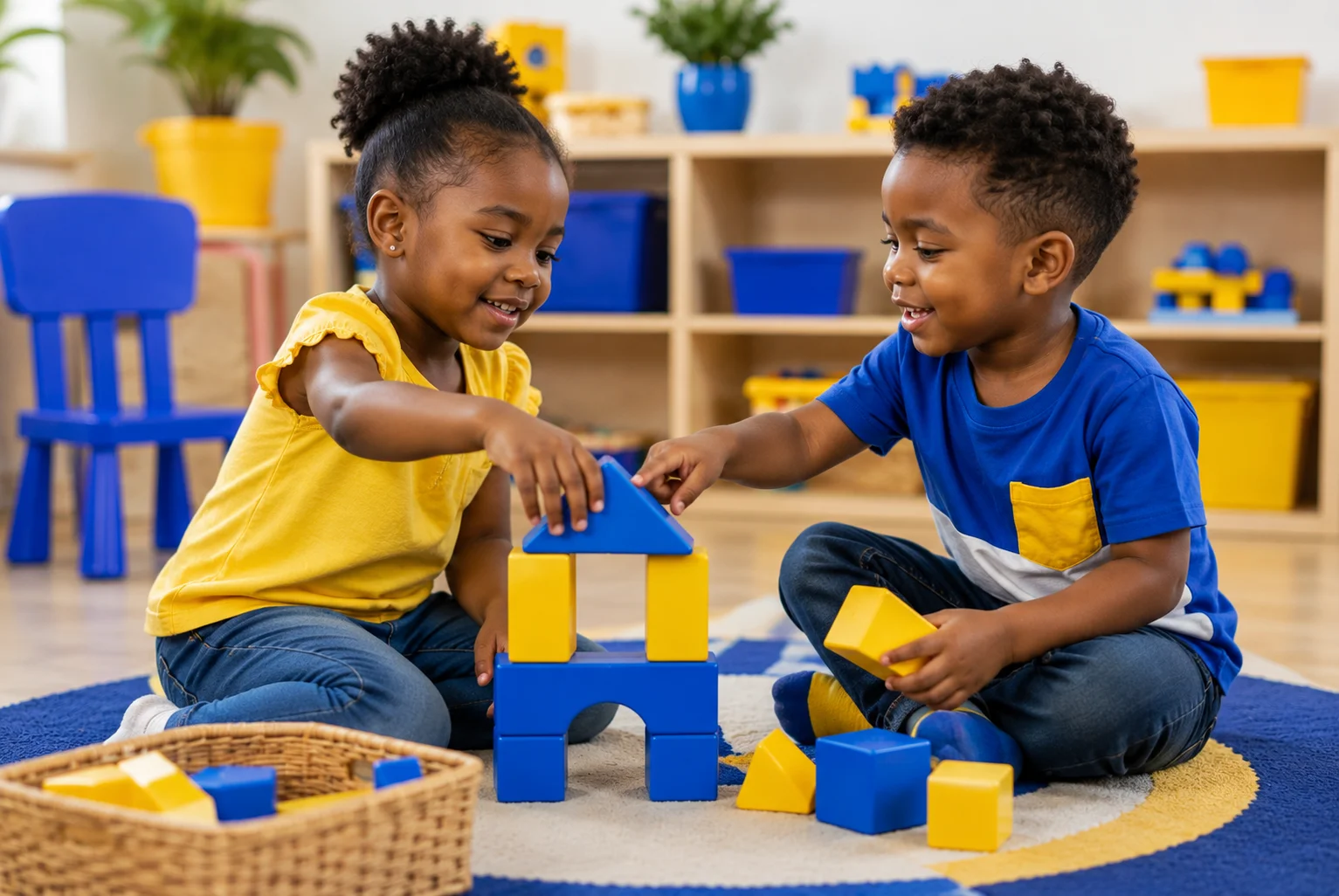
Through play, your child can strengthen communication and relationships, develop thinking and problem-solving abilities, and build movement and coordination skills. Everyday activities such as pretend play, building, drawing, and outdoor games give your child natural opportunities to explore ideas and practice abilities that are still developing.
One activity can support several areas at once. Building with blocks may involve talking about a plan, deciding where each piece belongs, adjusting when the tower falls, and using careful hand movements to rebuild it. Because play feels familiar and engaging, your child can practice these skills without turning every moment into a formal lesson.
At Clifford Glover Day Care Center, Inc., we recognize that play gives children room to communicate, explore, move, and make choices. If you want to compare care and learning options for your child, you can review our early childhood programs.
Three Ways Play Helps Young Children Grow
1. Play Builds Communication and Relationships
Pretend play, songs, shared games, and simple conversations give your child reasons to use language. They may name objects, explain an idea, ask for a turn, or create dialogue between toys. These moments help your child practice expressing needs and listening to what someone else says.
Play with another child also creates opportunities to cooperate and respond to small disagreements. Your child may still need help joining an activity, waiting, or finding words when something feels unfair. Calm guidance can keep the interaction moving without expecting children to solve every problem alone.
Talking, taking turns, exploring, and responding to others are some of the skills toddlers learn in a daycare program, and play gives your child natural opportunities to practice them.
2. Play Encourages Thinking and Problem-Solving
Play invites your child to make decisions, test ideas, and change course when something does not work. A puzzle may require turning a piece, while a sorting activity may encourage your child to notice similarities in color, shape, or size.
Blocks offer another clear example. When a tower falls, your child can try a wider base, use fewer pieces, or rebuild in a different order. Pretend play also supports flexible thinking because your child decides what an object represents and what should happen next.
You can support this process by asking an occasional question such as, “What could you try now?” Give your child time to think before stepping in with the answer.
3. Play Strengthens Movement and Coordination
Active play gives your child practice using larger body movements. Running, climbing, dancing, balancing, and throwing can help them become more aware of how their body moves through space.
Quieter activities support smaller hand movements. Drawing, stacking blocks, turning pages, shaping dough, and fitting puzzle pieces all require control and coordination. These abilities develop gradually, so your child may approach the same activity differently from another child of a similar age.
Offer safe choices that match your child’s current abilities. A short dance, a soft ball, or a few large building pieces can be enough to encourage movement without making the activity feel demanding.
What Everyday Play Can Look Like
Useful play does not require expensive toys or detailed instructions. Your child can:
- Build with household-safe materials
- Pretend with dolls or toy food
- Draw or create simple artwork
- Sing and move to music
- Explore outdoors
- Complete a simple matching game
You can make play easier to enjoy by offering safe materials, allowing enough time for the activity to develop, and following your child’s interest. Join when invited, but leave room for your child to make choices and change direction.
Regular opportunities to play, communicate, make choices, and become more independent are among the benefits of quality early childhood education.
Make Room for Play Without Adding Pressure
Your child does not need elaborate activities or constant adult direction to benefit from play. Regular time to explore, move, create, and interact gives developing abilities room to grow at a pace that feels natural.
At Clifford Glover Day Care Center, Inc., we value the everyday opportunities children have to learn through play, although activities and programs may vary by location.
If you want to learn more about choosing a program that may fit your child’s age and needs, you can contact us so our team can guide you as you compare programs and consider what may work for your family.
Leave a Reply